

Key Takeaways
- Use a four-step routine: disassemble the removable parts, soak them for 15 minutes, air-dry them vertically, then reassemble only when they are fully dry.
- Clean weekly as part of a regular home routine; your Neobay kit instructions take priority if they differ from a general spacer-care recommendation.
- Use lukewarm water and mild detergent. No scrubbing or rubbing is needed for the V4 cleaning routine.
- Remove the backpiece, Comfort Feeder and mask only. The Comfort Feeder is a removable treat holder, so it can be cleaned with the other removable parts.
- Wait for complete drying before reassembly. Keeping one simple wash-and-dry rhythm makes the next veterinarian-guided MDI session easier to prepare for.
To clean a Neobay cat inhaler spacer, follow the same four steps shown on the V4 product page: remove the backpiece, Comfort Feeder and mask; soak the removable parts for 15 minutes in lukewarm water with mild detergent; shake off excess water and air-dry them vertically without rubbing; then reassemble only when everything is completely dry. This is a practical care routine for the accessory, not a substitute for the instructions from your veterinarian or the instructions supplied with your chamber.
A clean-up routine should feel boring. That is the point. Pick one day each week, give the removable parts a short soak, let them dry, and put the chamber back together when it is ready for the next session.
What a cat inhaler spacer cleaning routine covers
A cat inhaler spacer is a non-medicated accessory that connects to a veterinarian-prescribed metered-dose inhaler (MDI) and gives a cat a chamber to breathe from. Cleaning it is basic product care: it helps keep the removable parts ready for routine use. It does not change the medication, dose, or care plan set by your veterinarian.
For the Neobay V4 routine, you only remove the backpiece, Comfort Feeder and mask. Do not turn cleaning day into a repair project. If a component looks damaged, does not fit as expected, or you are unsure how to care for it, pause and check the included instructions or ask your veterinary team before the next session.
The Neobay V4 four-step cleaning routine
1. Disassemble the removable parts
Remove the backpiece, Comfort Feeder and mask only. Put them somewhere clean where they will not roll under the sink or get mixed with other household items.

2. Soak for 15 minutes
Use lukewarm water with a mild detergent and soak the removable parts for 15 minutes. This is the V4 product-care instruction. Keep the routine simple; a scourer, brush, or towel is not part of the process.

Do I need a special cleaner?
No special cleaner is called for in the V4 routine: use mild detergent and lukewarm water. If you are considering a different cleaner, heat treatment, or a method that is not in your kit instructions, do not guess—follow the supplied instructions or ask your veterinary team.
3. Air-dry vertically—do not rub dry
Shake out excess water, then let the parts air-dry vertically. Do not rub them dry. This is the step that tends to get rushed when an evening routine is looming, so plan the weekly clean at a time that leaves enough drying time before the next use.

4. Reassemble only when completely dry
Once every removable component is completely dry, reinstall the backpiece, Comfort Feeder and mask. Give the assembled chamber a quick visual check against the included instructions before putting it away.

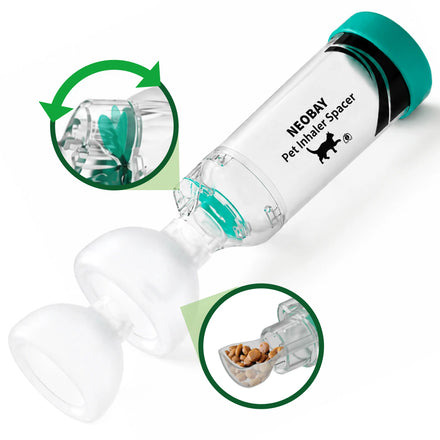
Neobay Cat Aerosol Chamber with Comfort Feeder — Green
- See each breath with the Breath Indicator
- Built-in treat holder makes mask practice easier
- Anti-static chamber helps keep medication airborne
Make weekly cleaning easier to keep up with
Weekly works best when it is attached to an existing habit: a quiet weekend morning, laundry day, or the period after a scheduled session when there is ample time for drying. Put a simple phone reminder in place. You should not need to remember every detail once the four steps become familiar.
If you use the Comfort Feeder during practice, remove it with the other parts before cleaning. Its job is straightforward: place a small amount of a familiar treat inside the mask area to invite your cat to put their mouth into the mask voluntarily. It is not a seal or a material feature, and it does not alter the cleaning sequence.
For households that need a chamber ready while another is drying, a second chamber can be a practical backup. Only choose that setup if it genuinely suits your household and the routine recommended for your cat.
When to check the included instructions or your veterinarian
Use the supplied product instructions as the first reference for your specific chamber. Check with your veterinary team if you are unsure whether a part can be removed, if a component is damaged, or if a routine is changing. They remain the right source for questions about your cat’s prescribed MDI, timing, and technique.
Do not improvise with boiling water, dishwashers, harsh cleaners, or repair tools when the instructions do not call for them. The useful answer is often the simple one: stop, confirm the correct care method, then continue.
How to Clean an AeroKat Chamber
The same weekly cadence applies if you use an AeroKat chamber instead. Detach the mask from the chamber body, wash both in warm water with mild soap, and let them air-dry fully before the next dose. Skip anything abrasive around the Flow-Vu indicator valve — scrubbing can deform the flap that counts your cat's breaths. A 2021 study in the Journal of Feline Medicine and Surgery contaminated feline inhalation chambers with bacteria and showed that the cleaning method you choose changes how much survives (PMID: 32228277), so technique matters whichever brand you own.
For the full device background, see our complete AeroKat chamber guide, or the step-by-step AeroKat usage routine for how doses are given between cleanings.
Frequently Asked Questions
How often should I clean a Neobay cat inhaler spacer?
The V4 maintenance note says to clean it weekly. Make that a regular care task, and always follow the instructions supplied with your own chamber if they give a different direction.
Which parts do I remove before cleaning?
For the V4 routine, remove the backpiece, Comfort Feeder and mask only. Do not dismantle other parts unless the supplied instructions specifically tell you to do so.
How long should the removable parts soak?
Soak them for 15 minutes in lukewarm water with mild detergent. The V4 process does not call for scrubbing, rubbing, or a special cleaner.
Can I towel-dry the spacer parts?
No. Shake out excess water and let the parts air-dry vertically; the V4 instructions specifically say not to rub dry. Reassemble only once every removable component is completely dry.
What is the Comfort Feeder, and how is it cleaned?
The Comfort Feeder is Neobay’s removable treat holder. You can place a small amount of a familiar treat inside the mask area to encourage voluntary mouth-in-mask practice, then remove the feeder with the backpiece and mask for the same 15-minute soak and air-dry routine.
What to Do Next
Save the four steps somewhere easy to find: disassemble, soak for 15 minutes, air-dry vertically, and reassemble when completely dry. Then use the product instructions in your kit as the final check for your specific chamber.
For the bigger picture on chamber types, setup, and everyday handling, read our guide to cat inhaler spacers. If your cat is still getting used to approaching the mask, our mask-training guide can help you build a slower routine.
Explore the Neobay Cat Aerosol Chamber if you need a chamber designed around a simple at-home routine. It is a non-medicated accessory for use with a veterinarian-prescribed MDI; the inhaler itself is not included.
Sources:
- Neobay Pet. V4 product care instructions: disassemble; soak for 15 minutes in lukewarm water with mild detergent; air-dry vertically; reassemble when completely dry.
- Klenk FK et al. Bacterial Contamination of Inhalation Chambers Used for Cats and Dogs with Chronic Airway Diseases. Pathogens. 2023.
Related Reading
This article is part of our What Is a Cat Inhaler Spacer? guide, covering device types, setup, cleaning, and everyday handling.


